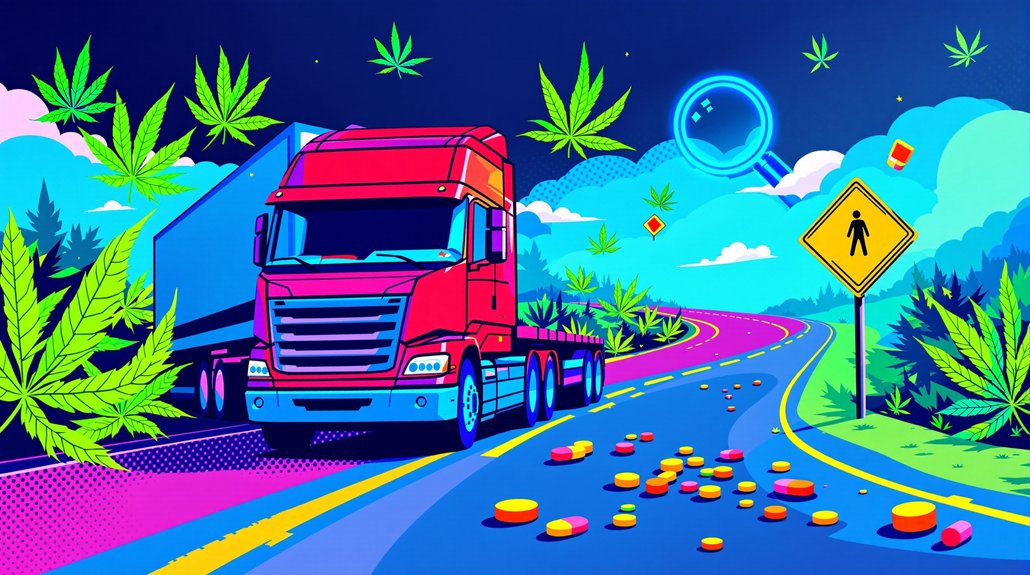

As federal regulators consider moving cannabis from Schedule I to Schedule III, transportation safety experts are raising urgent concerns about potential consequences for America’s roadways. The American Trucking Associations (ATA) warns that rescheduling could undermine significant drug testing protocols that currently serve as vital safeguards for public safety.
The stakes are significant. Studies reveal marijuana ranks among the most detected substances in impaired driving incidents, trailing only alcohol. State-level legalization has already demonstrated measurable impacts, with injury crash rates increasing by 6.5% and fatal crashes rising 2.3% following marijuana legalization. These aren’t just statistics, they represent real consequences on highways where impaired drivers struggle with diminished motor coordination, slower reaction times, and compromised decision-making abilities.
Perhaps more troubling is the dangerous disconnect between perception and reality among cannabis users. AAA Foundation research found that 85% of cannabis users admitted to driving on the same day they consumed marijuana. Only 19% believed their driving deteriorated after use, while 34% actually thought they drove better while impaired.
The ATA’s primary concern centers on potential loss of mandatory testing authority for safety-sensitive transportation roles if cannabis moves to Schedule III. Current federal protocols provide vital enforcement mechanisms that could vanish under rescheduling, leaving uncertainty about future HHS and DOT technical requirements for detecting cannabis impairment. Without explicit safeguards, the trucking industry fears losing essential tools for maintaining road safety standards.
Transportation safety experts emphasize that many states have failed to study or adequately address road safety implications following marijuana legalization. Research gaps remain substantial, with insufficient data on cannabis impairment and crash risk. Current roadside assessment tools need significant improvement, and evidence regarding THC’s cognitive and psychomotor effects while driving remains incomplete. Unlike alcohol, establishing impairment thresholds for THC presents virtually insurmountable scientific challenges due to individual metabolic differences and tolerance variations. Notably, federal restrictions currently limit research scope on cannabis health effects, hampering comprehensive understanding of impairment mechanisms.
The regulatory maze ahead requires careful coordination among DEA, DOT, HHS, and industry stakeholders. Safety advocates stress the need for continued authority to test for cannabis in safety-sensitive positions, balancing worker rights against public safety enforcement. Clear impairment standards and extensive protocols must emerge from any rescheduling decision. The rescheduling discussions echo concerns from other substance classifications like MDMA, where detection windows vary significantly between occasional and frequent users.
Public education campaigns will prove essential if rescheduling proceeds. The majority of experts cite increased public perception of cannabis safety as a primary risk, potentially normalizing cannabis use before driving and leading to higher rates of impaired driving incidents. Road safety messaging must urgently address widespread driver misperceptions about cannabis impairment to prevent further highway tragedies.