
Cannabis brands navigate a complex digital minefield where traditional advertising meets strict platform restrictions. Major social media companies maintain stringent policies against direct cannabis marketing, forcing businesses to develop creative workarounds through influencer partnerships and carefully crafted educational content. These limitations have sparked an underground economy of coded language and subtle visual cues that savvy users recognize instantly. The result? A thriving subculture that communicates in digital whispers while mainstream acceptance grows louder by the day.
Platform Policies and Cannabis Marketing Restrictions
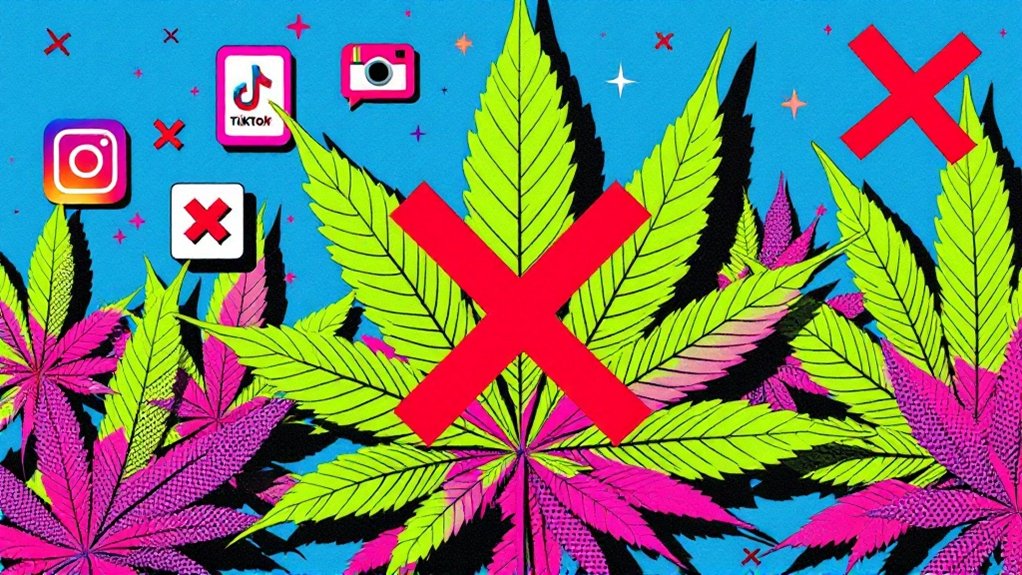
While cannabis gains legal acceptance across numerous states, social media platforms maintain restrictive policies that create a complex maze of regulations for businesses in the industry.
Instagram and Meta strictly prohibit direct cannabis promotion, regardless of state legality. Licensed dispensaries risk content removal and shadowbanning when posts include cannabis hashtags like #420 or explicit product names. The platforms allow visual content showing cannabis products but forbid sales language, pricing, or purchase links. Posts referencing cannabis explicitly in text or tags are deprioritized by Instagram’s algorithm, leading to decreased visibility and engagement.
Instagram’s cannabis policies create a contradiction: dispensaries can show their products but cannot actually sell them through the platform.
Facebook and TikTok classify cannabis as restricted content, making paid advertising nearly impossible. Even basic posts mentioning cannabis face flagging or removal. TikTok’s algorithm particularly targets consumption visuals and product close-ups for demonetization.
X stands apart as the most cannabis-friendly platform. It permits paid ads with proper age-gating and allows direct links to dispensary menus, creating unexpected opportunities for compliant brands.
YouTube provides opportunities for educational content and product reviews, though creators must implement age restrictions and cannot monetize through traditional advertising revenue.
Influencer Strategies and Community Building
Faced with these platform restrictions, cannabis brands have pivoted to influencer marketing and community-building strategies that operate within compliance boundaries.
Micro-influencers with niche audiences deliver superior results, cannabis campaigns report 4x to 12x ROI compared to celebrity partnerships. Smart brands focus on lifestyle alignment through wellness content and smoke-free experiences rather than direct promotion.
Long-term collaborations outperform one-off posts considerably. Co-developing product bundles with influencers creates authentic partnerships while transparent FTC compliance maintains brand safety. Brands that prioritize educational content report that 68% of consumers are more likely to purchase from them.
Educational content dominates successful campaigns. Behind-the-scenes tours and product walkthroughs avoid algorithm penalties while YouTube and Substack enable complex storytelling. Successful businesses leverage market projections showing a $8.24 billion industry by 2025 to inform their content strategy.
Community building extends beyond social platforms entirely. Omnichannel strategies boost customer retention by 33%, while owned media like newsletters and forums centralize growth outside restrictive ad environments. Cannabis brands should leverage first-party data to create personalized customer experiences and targeted messaging that drives deeper engagement within these owned channels.
Geo-targeted local partnerships turn compliance challenges into engagement goldmines.
Demographic Shifts and User Behavior Patterns

How dramatically has cannabis social media engagement shifted across generational lines?
Generation Z now drives discovery through Instagram and visual platforms, fundamentally reshaping industry marketing approaches. These digital natives substitute alcohol with cannabis while researching products exclusively online.
Millennials maintain their position as top spenders but demand functional products and brand storytelling over nostalgic appeals. Personalized marketing strategies have become essential for engaging this generation effectively.
Women have overtaken men in consumption rates, gravitating toward health and wellness narratives across social platforms.
Seniors represent the fastest-growing segment, using digital channels to explore medicinal applications for sleep and pain relief. The monolithic stoner stereotype has crumbled completely.
Adolescents spending over 1.5 hours daily on social media demonstrate considerably more positive cannabis attitudes, though actual consumption patterns don’t correlate directly with screen time. Research reveals that pro-cannabis attitudes significantly increase the likelihood of actual cannabis use among teenagers, with studies showing 1.80 times higher odds of past-month consumption.
Regulatory Compliance and Legal Boundaries
State regulations add another layer, banning advertisements appealing to minors through animal imagery or cartoon characters.
Missouri’s DCR has issued enforcement letters targeting child-appealing packaging designs. Operators must maintain compliance records across all digital channels.
Educational storytelling outperforms direct marketing while avoiding platform penalties. Creative messaging focusing on brand values builds audiences despite restrictions. Age verification systems must confirm users are 21 or older before accessing cannabis-related website content. The DCR provided new guidance on advertising cannabis products online to ensure compliance with consumer protection regulations. Veteran entrepreneurs often demonstrate superior capabilities in navigating these complex regulatory environments due to their military background.
Social Media’s Impact on Cannabis Attitudes and Health

While cannabis businesses navigate complex advertising restrictions across digital platforms, research reveals that social media content considerably shapes user attitudes and consumption patterns, particularly among younger demographics.
Studies demonstrate that frequent exposure to cannabis-related posts increases likelihood of use among adolescents and young adults. The influence proves strongest when content originates from friends, microinfluencers, and celebrities rather than brands.
TikTok emerges as particularly impactful for cannabis initiation among teens.
Community-level digital activity including regional cannabis tweets and Google searches correlates directly with local youth usage rates. Youth in high search volume areas show dramatically higher marijuana use rates at 15.0% compared to just 2.4% in low search volume regions.
Research indicates social media often minimizes health risks while promoting positive narratives about cannabis use. Recent findings reveal an alarming trend of dual use of cannabis and e-cigarettes among adolescents exposed to social media content.
This digital normalization accelerates destigmatization, especially in regions with relaxed policies, creating real-world behavioral shifts that researchers can now monitor in real-time.
Digital Communities and Subcultural Formation
Medical users gravitate toward dispensaries promoting alternative lifestyles and therapeutic benefits.
Illicit communities mainly feature youth and emergent adults sharing content about concentrates and edibles.
Recreational segments encompasses professionals, activists, musicians, and entertainment promoters within regional networks.
These digital subcultures develop distinctive languages, rituals, and content-sharing practices through memes, hashtags, and “weedfluencers.” Content diversity enhances audience reach and interaction across these varied cannabis communities.
Community dashboard tools enable rapid discovery of emergent cannabis subcultures.
Active participation provides users social capital and group belonging, reinforcing community norms while facilitating identification of previously hidden populations. The stochastic block model identified 359 distinct communities at the most granular level, revealing the complex organizational structure underlying cannabis-related social networks.
Educational content has become increasingly prevalent across platforms, helping to democratize knowledge about cannabis strains, consumption methods, and wellness applications.
Content Creation and Peer-to-Peer Influence
Cannabis content creators have transformed social media platforms into sophisticated marketing ecosystems, maneuvering restrictive policies while building engaged communities around their brands and products.
Meta-owned platforms like Facebook and Instagram enforce strict content policies that limit overt cannabis promotion, pushing brands toward more permissive spaces like Reddit, TikTok, and Tumblr. Smart marketers tailor content strategically: YouTube hosts educational deep-dives, Instagram showcases lifestyle imagery, and TikTok delivers trending humor.
Professional posting cadences average three to four weekly posts, with some brands tripling follower growth within months. Influencers and micro-influencers amplify this reach by presenting cannabis as relatable and appealing, particularly to younger demographics. Understanding demographic shifts is essential for creating content that resonates with the broadened consumer base now embracing cannabis culture. This targeted approach is particularly important as female consumers now represent over one-third of the cannabis market for adults over 21.
User-generated content—reviews, tutorials, personal stories—normalizes consumption through peer influence. Digital advertising dominates the space, with 83% of cannabis brands leveraging it as their primary outreach strategy. Success in this evolving landscape requires prioritizing community engagement over direct sales efforts, as traditional promotional tactics often fail to resonate with cannabis audiences.